Finding a Way Under Occupation
Bethlehem University’s Faculty on Education in Palestine
A community breast-cancer awareness session was a classroom assignment for Bethlehem University midwifery students: a practice in outreach, communication, and clinical judgment. Four women who attended were referred for early detection.
That outcome is one moment inside a much larger feature in This Week in Palestine, “When Education Must Find a Way: Bethlehem University’s Transformative Educational Model in a Time of Disruption.” The article gives a substantive account of how the university operates under conditions most institutions never have to plan for. Here’s some of what the piece explores:
Bethlehem University’s long, complex history, inseparable from Palestinian history itself.
Founded in 1973 with 112 students, Bethlehem University has weathered twelve closures by Israeli military order, including three consecutive years, 1987 to 1990, when the campus was shut entirely. Today the university serves more than 3,000 students and has graduated nearly 22,000 since its founding.
The author clearly name what this history has cost.
The article is direct on this point: Palestinian students should not be expected to become experts at studying through crisis, and no educational model, however innovative, can substitute for the freedom of movement, safety, and stability that real learning requires. As the piece puts it: resilience cannot replace rights.
Bethlehem University’s Transformative Educational Model is much more than “online learning.”
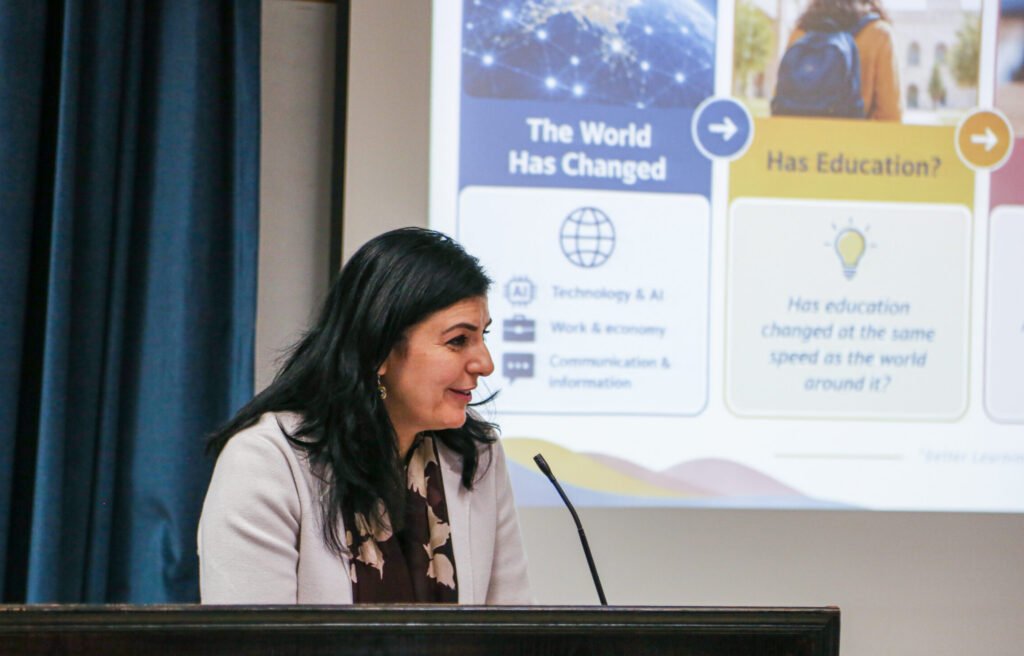
Developed as a long-term vision, the model foregrounds live instruction, independent digital work, and direct engagement with Palestinian communities, a deliberate structure built to protect what matters in a university education: relationships, critical thought, and professional formation, even when physical access to campus is disrupted.
Among the examples: Archaeology students partnering with schools in Beit Omar to preserve cultural heritage. Tourism students developing a proposal with Beit Sahour, a community hit hard by the disappearance of pilgrims and visitors. Students designing solar energy solutions, running clinical simulations, and winning first and second prizes in a cross-faculty competition among nine Palestinian universities. (link to our article)
For international supporters, the article argues that ethical solidarity begins with listening, and it strengthens Palestinian institutions as they pursue the priorities they’ve identified themselves.
Read the full article at This Week in Palestine
Bethlehem University Foundation USA and its community of supporters stand with the students and faculty at the center of this story through the Bethlehem Scholars Fund.